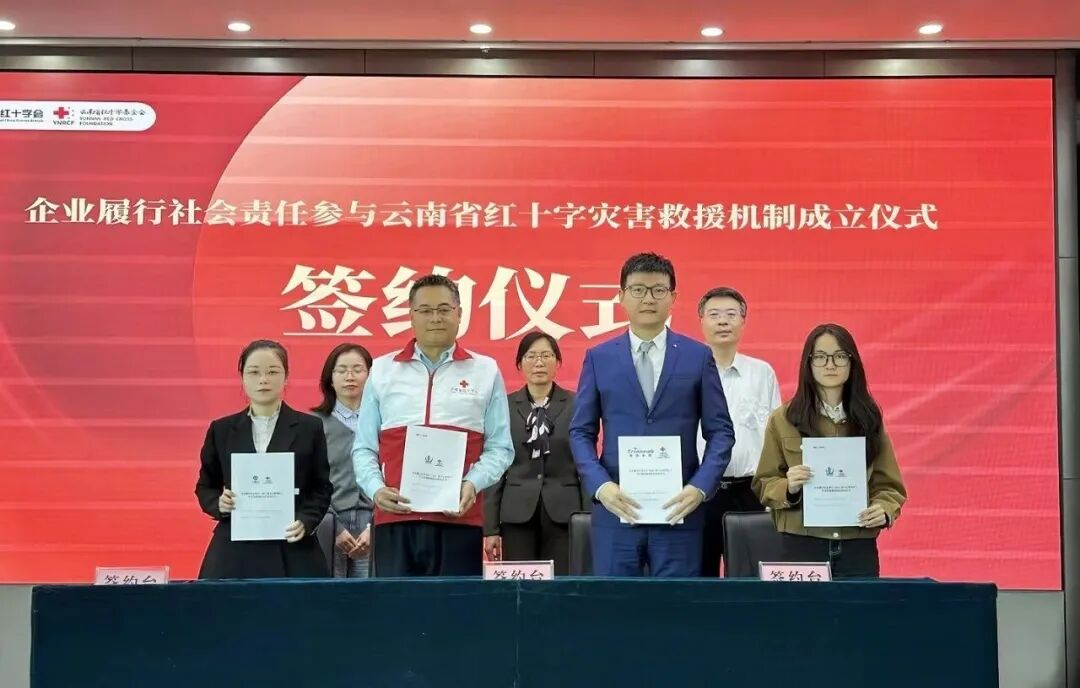
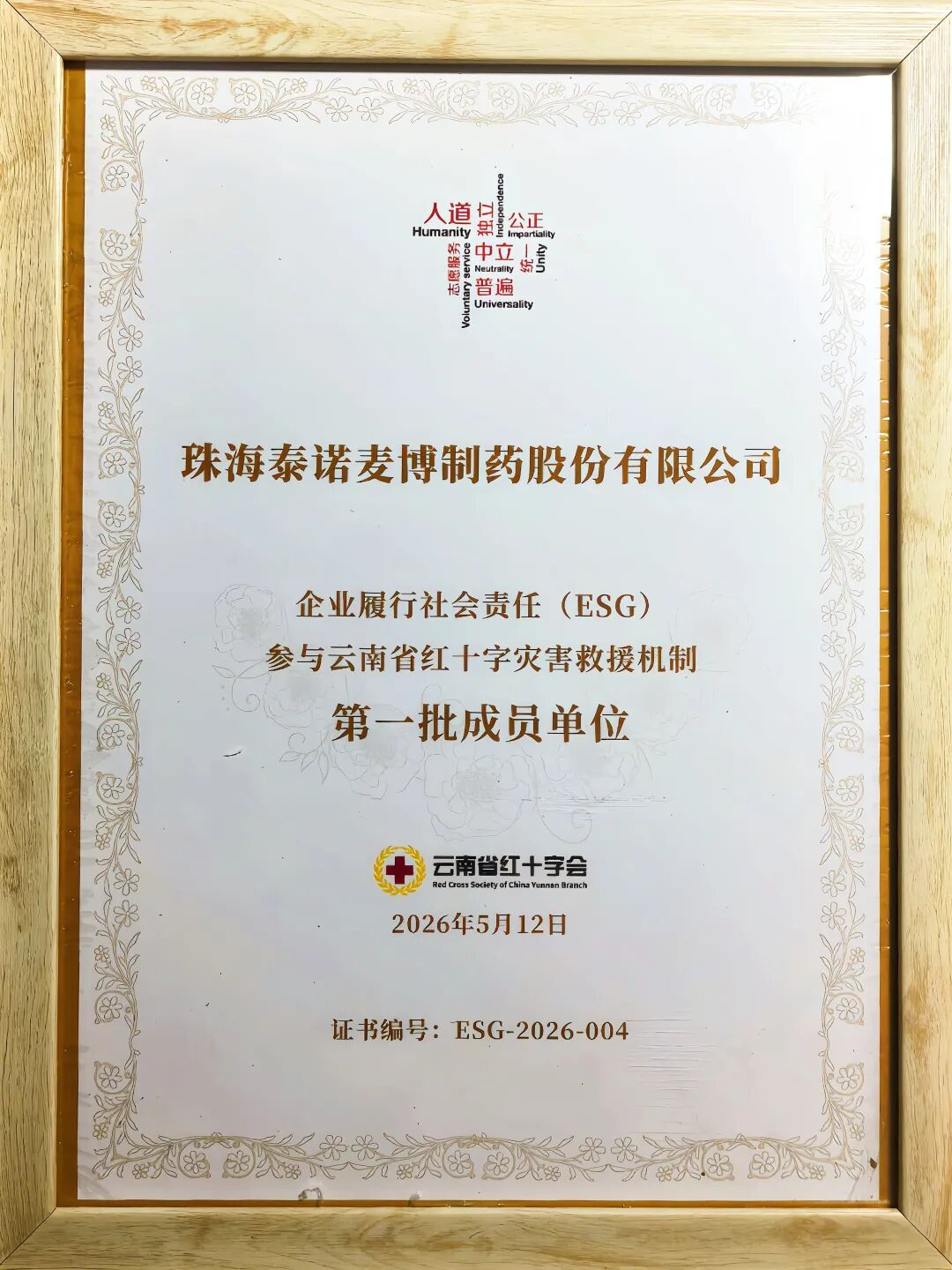
May 12, 2026 – Marking China’s 18th National Disaster Prevention and Reduction Day under the theme “Everyone Talks about Safety, Everyone Can Respond to Emergencies – Enhancing Capacities for Disaster Prevention, Mitigation, and Relief,” Zhuhai Trinomab Pharmaceutical Co., Ltd. (hereinafter referred to as “Trinomab”) officially signed the Cooperation Agreement on Corporate Social Responsibility (ESG) Participation in the Yunnan Provincial Disaster Rescue Alliance at the Yunnan Provincial Red Cross Disaster Preparedness and Relief Center. With this signing, Trinomab formally joined the Yunnan Provincial Disaster Rescue ESG Alliance, actively committing itself to disaster prevention, reduction, and relief efforts.
As a core member of the alliance, Trinomab’s self-developed next-generation “tetanus shot” — Siltartoxatug Injection has been officially incorporated into the alliance’s relevant framework. Indicated for emergency tetanus prevention in adults, this innovative biologic eliminates the need for skin testing, takes effect rapidly, delivers reliable protection with just a single injection, and provides a protection period exceeding 90 days. It effectively streamlines on-site disaster treatment procedures, making trauma emergency rescue both more efficient and safer.
Practicing ESG Principles and Integrating into the National Emergency Response System
Yunnan Province is one of the regions in China most prone to natural disasters. Building an efficient rescue system that features “government leadership, Red Cross coordination, enterprise participation, and social collaboration” is critically important. In the modern business landscape, corporate social responsibility (ESG) has become a vital component of strategic planning. Integrating environmental, social, and governance factors into operations not only meets societal expectations but is also key to sharpening corporate competitiveness and international image. Disaster relief, as a significant arena for social responsibility, demonstrates a company’s commitment and capacity to act at pivotal moments.
Trinomab’s invitation to officially join the disaster rescue alliance represents a core initiative to fulfill its public health responsibilities and marks a profound upgrade of its ESG strategy. The company is moving beyond routine, single-dimensional public welfare practices to establish a multi-dimensional emergency response mechanism that integrates both peacetime and wartime functions, injecting the professional strength of an innovative pharmaceutical company into regional disaster rescue and the fortification of public safety defenses.
A Multi-Dimensional Response Mechanism: Creating a Quantifiable ESG Cooperation Model
Trinomab will establish an internal rapid decision-making process for emergency response, ensuring it can immediately answer the Yunnan Provincial Red Cross’s rescue needs as soon as a disaster strikes:
Targeted Material Support
Based on the disaster area’s specific demand list, Trinomab will promptly donate the next-generation “tetanus shot” — Siltartoxatug Injection — prioritizing infection prevention and control for trauma victims. Donations will be supplemented with emergency kits, anti-infection medicines, and other critical supplies to achieve precisely targeted, demand-driven aid.
Full Transparency and Continuous Coordination
A 24-hour communication mechanism will be established with the Yunnan Provincial Red Cross to track the flow of donated materials in real time, ensuring openness and full traceability. After the disaster response concludes, Trinomab will actively participate in project review and assessment to continuously enhance emergency response efficiency.
Empowering the Rescue Frontline with Innovative Products, Tackling the Challenges of Post-Disaster Infection Control
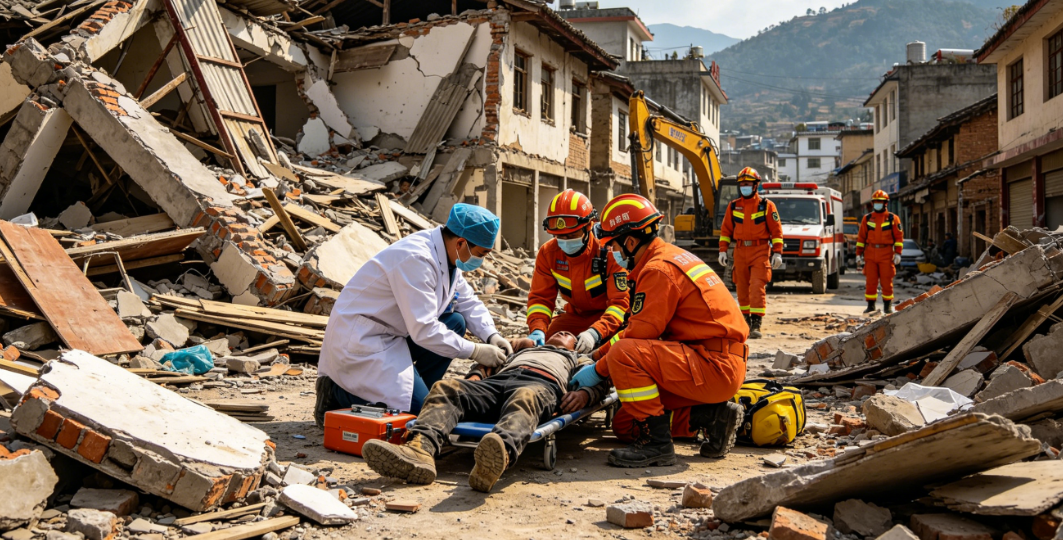
In the wake of a disaster, trauma exposure, wound contamination, and soaring infection risks present core medical challenges second only to life search and rescue. Traditional passive tetanus immunization products — such as Tetanus Antitoxin (TAT) and Human Tetanus Immunoglobulin (HTIG) — often suffer from high allergy rates, significant batch-to-batch potency variation, and unstable supply. The next-generation “tetanus shot,” Siltartoxatug, delivers revolutionary value in disaster emergency care:
Rapid Onset with Long-Lasting Protection
Siltartoxatug achieves protective antibody levels in 95.4% of patients within 12 hours of administration, acting swiftly to secure the critical “golden treatment window” for the injured. It simultaneously offers a protection period exceeding 90 days, ensuring more durable coverage for patients.
High Safety Profile, No Skin Test Required
Boasting an excellent safety record, Siltartoxatug requires no skin testing and carries no potential risk of blood-borne pathogen transmission. It can be deployed rapidly and at scale to frontline medical sites, significantly reducing the decision-making burden on grassroots rescue personnel.
Minimal Batch-to-Batch Variation and Convenient Storage
Manufactured using genetic engineering technology, Siltartoxatug breaks free from the reliance on human or equine blood plasma as raw materials. Its formulation is highly stable and compatible with emergency cold chain logistics, allowing drug allocation to disaster sites across the province and even inter-provincially within 72 hours.
In upcoming joint drills and real-life rescue operations, Trinomab will prioritize the supply of innovative anti-infective drugs required by the alliance and deliver professional medication training to rescue medical teams — truly delivering a dual output of “products + expertise.”
“Innovative medicines should not remain confined to laboratories and commercial markets; they must reach the rescue frontlines where they are needed most,” stated a Trinomab representative. “We are deeply honored to join hands with the Yunnan Provincial Red Cross. Trinomab steadfastly upholds the belief in ‘Technology for Good, Life Above All.’ We will continue to bring our professional strength to bear — a solid antibody force — to safeguard the life and health of the people and to enhance the regional capacity for disaster prevention, reduction, and relief.”